
How To Make AEO and GEO Profitable
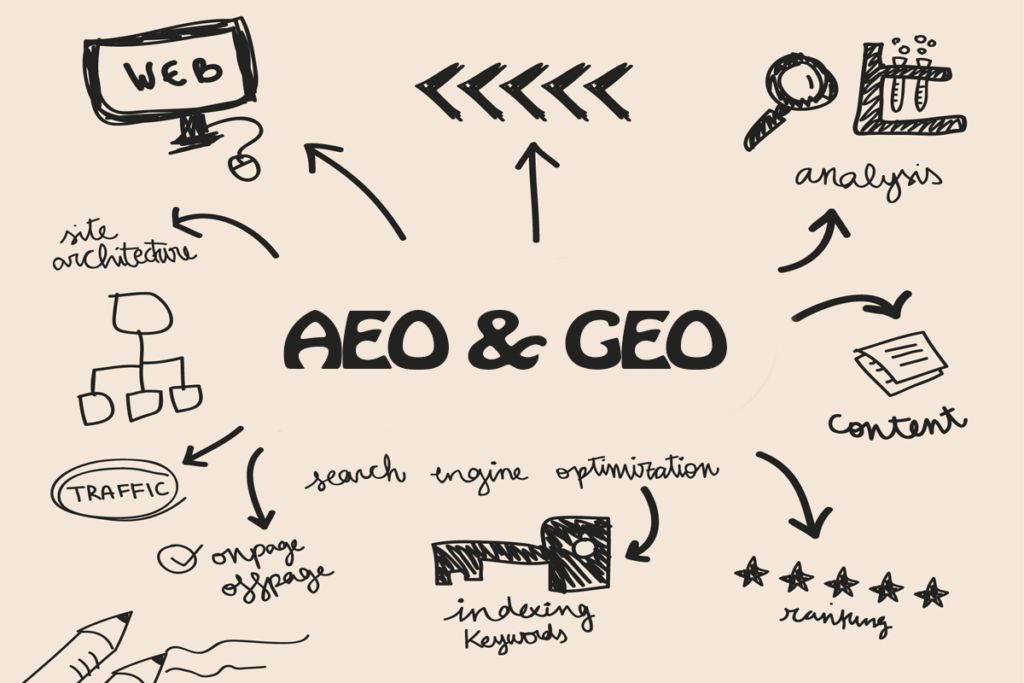
You might be appearing in ChatGPT responses, earning citations in Google’s AI Overviews, and seeing your brand mentioned more frequently across AI-powered platforms.
Yet revenue remains unchanged.
This is the challenge many marketing teams face today. AI visibility is increasing, but profitability isn’t keeping pace. After analyzing more than 100 AEO (Answer Engine Optimization) and GEO (Generative Engine Optimization) campaigns, one pattern became clear: the problem isn’t the strategy itself. Most organizations are simply optimizing for the wrong outcomes.
If you already understand AEO and GEO and want to turn AI visibility into measurable business growth, this guide is for you. We’ll explore why the profitability gap exists, what successful campaigns have in common, and how to build an AI search strategy focused on revenue, not just visibility.
Why Most AEO/GEO Efforts Don’t Generate Revenue
Getting cited is not the same as getting customers.
That distinction may seem obvious, yet many AEO and GEO programs are designed to maximize mentions and assume revenue will naturally follow. In practice, it rarely does.
After auditing campaigns across multiple industries, four recurring issues consistently prevented AI visibility from translating into business results.
Optimizing for Mentions Instead of Conversions
Mentions don’t pay the bills, conversions do.
If your entire AEO or GEO strategy revolves around appearing in AI-generated responses, you’re measuring a proxy rather than a business outcome. A citation without a clear path to conversion becomes brand awareness that’s difficult to attribute to revenue.
Measuring AI Visibility Like Traditional SEO Rankings
Citation volume alone tells you nothing about pipeline or revenue.
Many teams treat AI mentions the same way they once tracked keyword rankings, resulting in dashboards filled with activity metrics but little evidence of business impact. Leadership doesn’t need to know how many times your brand appeared, they need to know what those mentions produced.
Chasing AI Tactics Without Building Authority
Schema markup, entity optimization, and prompt-focused strategies all have value, but they aren’t enough on their own.
Without high-quality content, strong authority signals, and effective distribution, AI-specific tactics produce only temporary improvements. Sustainable visibility comes from building a solid content and authority foundation that compounds over time.
Separating AI Visibility From Revenue Goals
This is the most common and costly mistake.
Visibility without measurable business outcomes is simply another marketing expense. The organizations securing ongoing investment in AI search are the ones that connect citations directly to pipeline growth and revenue.
Across tracked brands, AI visibility increased significantly, but profitability improved even more. That gap represents one of the biggest opportunities in modern search marketing.
The Profitability Gap: How AI Changes the Buying Journey
People who discover your business through AI don’t behave like traditional search users.
Traditional search follows a familiar pattern:
- Search for information.
- Click multiple websites.
- Compare options.
- Continue researching.
- Return later to make a decision.
AI-assisted buying is different.
Much of the research happens inside AI tools before users ever visit your website. By the time they click, they’ve often validated your brand, compared alternatives, and narrowed their choices. They arrive better informed, with stronger purchase intent, and convert faster when trust already exists.
That creates a significant advantage, but only if your website is designed to support high-intent visitors.
Data shows that AI-referred visitors convert at 5.97%, compared to 0.72% for traditional search traffic. Average time to conversion drops from eight days to three, while revenue per visitor increases from $2.56 to $18.04.
Although AI currently represents only about 0.58% of overall traffic, it accounts for approximately 5.09% of sales. Lifetime customer value is also higher, averaging $325 compared to $271 for Google-referred visitors.
The opportunity is clear. The challenge is building a conversion funnel designed for buyers who arrive ready to act, not those still gathering information.
What Successful AEO/GEO Campaigns Have in Common
Across every campaign analyzed, the highest-performing organizations shared four characteristics. Together, they created a system that generated both AI visibility and measurable revenue.
Content Built for AI Retrieval
The content that performs best in AI search isn’t generic top-of-funnel content.
Instead, it answers high-intent questions buyers ask shortly before making a purchasing decision.
Comparison pages, alternative guides, and product comparisons consistently generated the highest conversion rates for AI-referred traffic. Original research and proprietary data earned citations because they provided information unavailable anywhere else, making them reliable sources AI engines referenced repeatedly.
Comprehensive buying guides, decision-focused educational content, and well-structured FAQ pages also performed exceptionally well.
Content structure matters just as much as the topic itself.
Nearly half of AI citations came from list-based content, while step-by-step guides accounted for another significant share. AI systems favor content that’s easy to scan, understand, and retrieve. If your content isn’t structured for retrieval, it’s far less likely to be cited.
Strong Authority Signals
Authority remains one of the strongest predictors of AI visibility.
Third-party citations consistently ranked among the highest-value trust signals across AI platforms. Expert authorship also played a major role.
AI systems reward credibility that is difficult to fake, including:
- Named subject-matter experts
- Verifiable author credentials
- External publications referencing your content
- Consistent brand presence across trusted websites
Publishing valuable content on your own website is essential, but earning recognition beyond your own domain is what strengthens long-term authority.
Multi-Channel Distribution
Authority isn’t built in one place.
AI engines evaluate consistency across multiple platforms. A brand that’s active on YouTube, LinkedIn, Reddit, industry publications, podcasts, and digital PR channels sends stronger trust signals than one relying solely on its own website.
Repeated exposure across trusted sources reinforces credibility and increases the likelihood of future citations.
Conversion Architecture for High-Intent Visitors
AI visitors arrive with a different mindset.
They’ve already researched the problem, compared options, and often formed a shortlist before visiting your website.
Landing pages designed for early-stage awareness frequently underperform because these visitors don’t need basic education—they need confidence.
The most successful brands optimize for that reality by delivering:
- Fast-loading pages
- Highly visible trust signals
- Simplified calls to action
- Bottom-funnel calculators and interactive tools
- Messaging that reinforces buying decisions instead of introducing product categories
Measure Revenue, Not Just Visibility
Many marketing teams continue measuring the wrong KPIs.
Rankings, click-through rates, AI mentions, impressions, and raw traffic all indicate visibility. None of them directly measure business performance.
The organizations earning continued investment in AI search connect visibility to revenue through a different measurement framework.
Instead of focusing primarily on:
- Keyword rankings
- Organic traffic volume
- Click-through rate
- AI mention counts
- Raw citation volume
- Vanity impressions
Prioritize metrics such as:
- Influenced conversions
- Brand search growth
- Assisted pipeline
- Returning visitor quality
- Conversion rate by acquisition source
Build reporting in three layers.
At the foundation, monitor visibility and influence signals such as brand search volume, share of voice, earned media, and community engagement.
The next layer should measure demand through multi-touch attribution, behavioral intent, AI-assisted lead scoring, and content engagement.
At the highest level, focus on business outcomes, including revenue, customer acquisition cost (CAC), lifetime value (LTV), retention, expansion, and customer advocacy.
Build your reporting from business outcomes upward—not marketing activities downward.
Leadership wants to understand business impact, not marketing effort.
Recent research reflects this shift. Executive interest in keyword rankings has declined significantly, while pipeline contribution and revenue growth have become primary performance indicators.
A practical first step is simple: for every vanity metric on your dashboard, add a corresponding outcome metric. That single change often transforms how leadership evaluates marketing performance.
A 90-Day Plan to Turn AEO/GEO Into Revenue
You don’t need to rebuild your entire marketing strategy overnight.
Instead, execute the process in three structured phases. Each stage builds on the previous one, creating momentum that compounds over time.
Days 1-30: Audit and Strengthen the Foundation
Start by evaluating your visibility across ChatGPT, Gemini, Claude, Perplexity, and Google AI Overviews.
Search for your brand, products, and primary topics. Identify where you’re cited, where competitors dominate, and where opportunities exist.
Then:
- Identify high-intent content gaps.
- Improve page structure with clear headings, FAQs, and concise answers.
- Strengthen author credibility and entity signals.
- Reinforce trust with reviews, third-party mentions, and consistent branding.
- Implement structured data and AI-friendly formatting.
Across most audits, brand authority, digital PR, and community visibility consistently emerge as the weakest areas. Strengthening those foundations should come before producing large volumes of new content.
Days 31-60: Create and Distribute High-Intent Content
Focus on content formats that drive both citations and conversions.
Prioritize:
- Comparison pages
- Alternative guides
- Original research
- Proprietary data studies
- Buying guides
- Expanded FAQ resources
Then distribute that content through LinkedIn, YouTube, digital PR, expert commentary, industry publications, and communities like Reddit.
AI systems reward consistent authority across multiple ecosystems, not just your own website.
Days 61-90: Optimize Conversion and Measurement
With your authority and content foundation in place, shift attention to conversion optimization.
Improve the experience for AI-referred visitors by:
- Enhancing bottom-funnel user journeys
- Adding calculators and interactive tools
- Simplifying calls to action
- Improving assisted conversion paths
At the same time, strengthen your reporting by measuring AI-influenced pipeline, comparing conversion quality across acquisition channels, and building executive dashboards that connect AI visibility directly to revenue.
Frequently Asked Questions
Below are some of the most frequently asked questions about AI search optimization, AI citation audits, content optimization, and AI search visibility, answered by the author using real-world experience and industry best practices.
An AI search optimization response analysis evaluates how AI platforms such as ChatGPT, Gemini, Claude, and Perplexity interpret, summarize, and reference your website. The audit examines whether your brand is cited, how accurately your content is represented, which competitors appear alongside you, and whether AI-generated responses recommend your products or services. This process helps identify gaps in authority, content quality, and structured information that influence AI-generated answers.
Measuring profitability requires looking beyond AI citations and impressions. Focus on business metrics that demonstrate commercial impact, including AI-referred sessions, engagement rate, conversion rate, qualified leads, assisted conversions, customer acquisition cost (CAC), revenue per visitor, average order value, and customer lifetime value (CLV). It is also important to monitor how often your brand is cited in AI-generated answers, your share of AI visibility compared to competitors, and the conversion performance of pages frequently referenced by AI platforms. Together, these metrics provide a clear picture of whether your AEO and GEO efforts are generating meaningful business results rather than simply increasing visibility.
Connecting AEO and GEO to revenue starts with accurate attribution. Track visitors who arrive from AI platforms using analytics tools, campaign parameters, and conversion tracking. Measure how these users interact with your website, which pages they visit, and whether they complete valuable actions such as submitting a contact form, requesting a quote, subscribing to a newsletter, or making a purchase. Compare AI-referred traffic with organic search, paid campaigns, and referral channels to evaluate conversion rates and revenue contribution. By assigning a monetary value to leads and sales influenced by AI-generated recommendations, you can calculate return on investment and identify which optimization strategies deliver the highest business impact.
AI-referred visitors typically arrive with strong intent because they have already received recommendations or answers before clicking through. As a result, content that directly supports purchasing decisions tends to perform best. This includes in-depth buying guides, product comparisons, service pages, pricing pages, case studies, customer success stories, FAQs, implementation guides, and detailed product reviews. Content that demonstrates expertise, answers specific questions, builds trust with evidence, and includes clear calls to action consistently produces higher conversion rates than purely informational articles.
No. While AI citations and brand mentions indicate that your content is being recognized by AI systems, they are only part of the picture. True success should be measured by qualified traffic, lead generation, customer acquisition, revenue growth, and overall return on investment. Visibility creates opportunities, but profitability comes from turning those opportunities into measurable business outcomes.
Results vary depending on your website’s authority, competition, and the quality of your content. Some improvements in AI citations and visibility may appear within a few weeks after publishing optimized content, while meaningful increases in qualified traffic and revenue often take several months. Consistently publishing authoritative content, improving technical SEO, and monitoring AI search performance are essential for long-term success.
As more users rely on AI assistants to research products, compare services, and make purchasing decisions, AI-generated referrals are becoming an increasingly valuable traffic source. Tracking this traffic helps businesses understand user behavior, identify high-performing content, optimize conversion paths, and make informed decisions about future AEO and GEO investments.
Final Thoughts
The opportunity to establish authority in AI search exists today, but it won’t remain wide open forever.
Organizations investing in strong content, credible authority signals, multi-channel distribution, and conversion-focused experiences are building advantages that compound over time. As those signals strengthen, they become increasingly difficult for competitors to replicate.
The goal isn’t simply to earn more AI citations.
It’s to build an AI search strategy that consistently turns visibility into qualified leads, customers, and long-term revenue.

Jun Homecillo
Website Developer
Related Articles

What is an AI Citation Audit? Why Your Content Needs One in 2026
If you’ve been monitoring your brand’s visibility across AI search platforms but aren’t getting meaningful insights, the problem often begins long before you analyze the...
Latest Articles
Explore everything you need to know in our latest articles.
How To Make AEO and GEO Profitable
You might be appearing in ChatGPT responses, earning citations in Google’s AI Overviews, and seeing your brand mentioned more frequently across AI-powered platforms. Yet revenue...
How to Create a Robots.txt File for Search Engines
A properly configured robots.txt file helps search engines understand which parts of your website they should crawl and which areas they should ignore. While it’s...
Are Backlinks Still Important for SEO and AI Search?
AI is transforming how people search for information, but one core SEO principle has remained remarkably resilient: backlinks. A backlink is a hyperlink from one...
What is an AI Citation Audit? Why Your Content Needs One in 2026
If you’ve been monitoring your brand’s visibility across AI search platforms but aren’t getting meaningful insights, the problem often begins long before you analyze the...
